Aucun message portant le libellé player of the day. Afficher tous les messages

mardi 10 novembre 2015

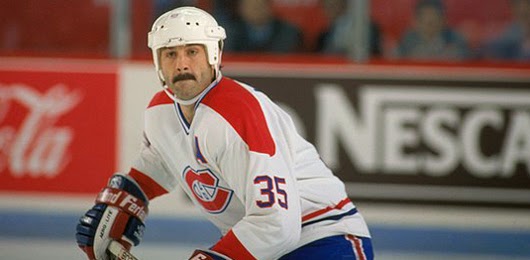
The Hockey Unknows : Brian Bellows


Brian Edward Bellows (born September 1, 1964) is a Canadian retired professional ice hockey player. He played nearly 1200 games in the National Hockey League (NHL) with the Minnesota North Stars, Montreal Canadiens, Tampa Bay Lightning, Mighty Ducks of Anaheim and the Washington Capitals. He was a member of the 1993 Stanley Cup-winning Montreal Canadiens.


Height 5 ft 11 in (180 cm)
Weight 210 lb (95 kg; 15 st 0 lb)
Position Left Wing
Shot Right
Played for Minnesota North Stars
Montreal Canadiens
Tampa Bay Lightning
Mighty Ducks of Anaheim
Washington Capitals
Berlin Capitals
National team  Canada
NHL Draft 2nd overall, 1982
Minnesota North Stars
Playing career 1982–1999


Playing career

Bellows played junior hockey in the Ontario Hockey League with the Kitchener Rangers. During this time, he was featured in Sports Illustrated, which described him as the hottest prospect since Wayne Gretzky.[1]


Bellows was drafted second overall by the Minnesota North Stars, who had acquired the draft pick in a trade with Detroit with the purpose of having a shot at Bellows. North Stars GM Lou Nanne sent Don Murdoch, Greg Smith, and a first round pick (Murray Craven) to the Wings in exchange for what later turned out to be the second overall draft pick. Bellows was often compared to Gretzky, which led to a tough rookie season. The pressure of such comparisons caused criticisms when he did not live up to them. Bellows improved greatly in the second half of the season and finished with 35 goals. In the playoffs that year, Bellows scored 9 points (5 goals, 4 assists) in 9 games.
Bellows played 10 seasons with the North Stars and was popular in Minnesota for his charity work, as well as his goal-scoring. He had a North Star record 342 goals in 753 games, peaking with 55 goals in 1989–90. In 1990–91, Bellows scored 29 points in the post-season to become the North Stars career playoff point leader, and took the North Stars to the Stanley Cup finals where they fell to the Pittsburgh Penguins.


When team captain Craig Hartsburg was injured partway through the 1983–84 season, Bellows was named interim captain for the remainder of the season. At 19 years and 4 months, Bellows became captain at an earlier age than Gabriel Landeskog and Sidney Crosby. However, because he was an interim captain, Landeskog is still considered the youngest captain in history.[2][3]


On August 31, 1992, Bellows was traded to the Montreal Canadiens for Russ Courtnall. The trade angered Bellows at first, but he relished the chance to play for the Canadiens. Bellows remarked "I hope to score more than last year. I want to come in and prove I can still play to the levels expected. I was shocked [about the trade] but I'm excited about the new change. My idol was Ken Dryden. It's every kid's dream to play for the Canadiens." In the 1992-93 NHL season his 88 points were the second highest season total of his career, and his 15 playoff points helped the Canadiens win the Stanley Cup in 1993.


As his career was winding down, Bellows played for the Tampa Bay Lightning, Mighty Ducks of Anaheim and the Washington Capitals. In the 1997–98 NHL season the Capitals made it to the Stanley Cup finals, but lost to the Detroit Red Wings. En route to the Eastern Conference championship, Bellows scored the series-clinching overtime goal in the first round in Game 6 against the Boston Bruins. The 1998–99 season was his last. On January 2, 1999, Bellows scored his 1000th career regular season point, becoming the 54th NHL player to reach that plateau.


Bellows was named to the 1990 Second All-Star team, and played in three NHL All-Star Games (1984, 1988 and 1992). He retired with 485 goals, 537 assists and 1,022 points. He was named the top forward at the 1989 World Ice Hockey Championships, as Canada won the silver medal.

Awards


Career statistics


jeudi 5 novembre 2015

The Hockey Unknows : Mike McPhee


Michael Joseph McPhee (born July 14, 1960 in Sydney, Nova Scotia and raised in River Bourgeois, Nova Scotia) is a retired Canadian ice hockey forward.


He began his professional career with the AHL’s Nova Scotia Voyageurs after being selected in the sixth-round (124th overall) of the 1980 NHL Entry Draft by the Montreal Canadiens.[1]


He began his NHL career with Montreal in 1984. McPhee was a member of Montreal's Stanley Cup winning team in 1986. His best NHL season came in 1987-88, with linemates Guy Carbonneau and Russ Courtnall, when he scored 23 goals and 43 points. The following season, he took part in the only NHL All-Star Game of his career.

He was also a three-time winner of the Jacques Beauchamp Trophy as the Montreal Canadiens’ unsung hero.[2]


McPhee also played with the Minnesota North Stars and Dallas Stars before a knee injury forced him to retire following the 1993-94 season.


McPhee earned a civil engineering degree at Rensselaer Polytechnic Institute, where he was a standout player for the Engineers before making his professional debut in 1982. After retiring from the NHL, he went back to school to complete his MBA.[3] He is currently working as a financial advisor for National Bank of Canada in Halifax, Nova Scotia.


 STATS :


vendredi 22 mai 2015

The hockey Unknowns : Don Sweeney


Donald Clarke Sweeney (born August 17, 1966) is a former ice hockey player who played over 1,100 games in the NHL, most of it with the Boston Bruins of the National Hockey League (NHL). He is now with the Bruins as the assistant general manager.

Height 5 ft 10 in (178 cm)
Weight 184 lb (83 kg; 13 st 2 lb)
Position Defence
Shot Left
Played for AHL
Maine Mariners
NHL
Boston Bruins
Dallas Stars
National team  Canada
NHL Draft 166th overall, 1984
Boston Bruins
Playing career 1988–2004


Playing career

Donald Sweeney grew up in St. Stephen, New Brunswick, Canada. Sweeney was drafted out of St. Paul's School in Concord, New Hampshire, where he played with his school team as a defenceman, round 8: 166th overall, by the Boston Bruins. Before joining the Bruins, he played for four years at Harvard University where he was a NCAA East All-American and an ECAC First Team All-Star in 1988.


He made his NHL debut during the 1988–89 season, having spent half of the year with the American Hockey League's Maine Mariners. In the following season he helped the team to win the Prince of Wales Trophy by scoring six points in 21 games until they finally lost to the Edmonton Oilers in the Stanley Cup finals.


In 1992–1993, Sweeney played in all 84 games and put up 36 points and ended up winning the Adams Trophy that year. In both the 1994/95, 1995/96, 1996/97 seasons,[when?] he was second amongst the defenceman on the team with 22 and 28 points respectively. In 1998, Sweeney missed the last 23 games of the season with a fractured shoulder that he suffered on March 1. In the next season, Sweeney achieved 205 hits and 85 blocked shots in 81 games. In the 1999/2000 season he had 301 hits and 84 blocked shots. The following year he had 172 hits in 72 games and in 2000/01 season he contributed 18 points in 81 games. In the 2002/03 season Sweeney scored only eight points in 67 games as his team nestled into third place in the division. On November 14 that year, he played in his 1,000th NHL game.

He played 15 seasons and 1,051 games for the Bruins uniform, and is one of just four players (two defencemen) in team history to play in over 1,000 games.


Since July 2006, he has ranked third on the Bruins' all-time games played list and among all-time club defencemen, he ranks tenth in career goals, eighth in assists and ninth in points with 52–210=262 career Boston totals.

Sweeney concluded his NHL playing career in 2003–04 with the Dallas Stars. He retired with 52 goals and 221 assists for 273 points and 681 penalty minutes in 1,115 career regular season games. He added nine goals and ten assists for 19 points with 81 penalty minutes in 108 career playoff contests.


He took a job in 2005 as Assistant Dean of Admissions at Phillips Academy in Andover, Massachusetts, and was also a studio analyst for Bruins' games on New England Sports Network (NESN). He was a color commentator for college hockey games on NESN and CBS College Sports Network.[citation needed]


On June 21, 2006, Sweeney rejoined the Boston Bruins as the team's director of player development, responsible for the scouting of professional league players, as well as tracking the progress of the team's drafted prospects at the AHL, junior hockey and college levels. On July 14, 2007, he was promoted to director of hockey operations and player development.[citation needed] In July 2010, he was promoted to the assistant general manager.[citation needed] In 2011, his name was engraved on the Stanley Cup after the Boston Bruins won their first Stanley Cup in 39 years.[citation needed]

He and his wife, the former figure skater Christine Hough, have twin sons, Jarrod and Tyler. He is a distant relative of the USA soccer midfielder Tucker Reinhardt.[citation needed]


Career Stats :


mardi 12 mai 2015

The Hockey Unknowns : Claude Lapointe


Claude Lapointe (born October 11, 1968) is a Canadian former ice hockey player. In his career, Lapointe played for the Quebec Nordiques, Colorado Avalanche, Calgary Flames, New York Islanders, and Philadelphia Flyers.


Early life

Lapointe grew up in the city of Lachine, Quebec. As a child all he did was play hockey. As a teenager his first job wasn't an average job. It was playing in the QMJHL. Players in this league got paid just like players in the NHL do, just not as much money. Other than this, Lapointe had no other occupations other than hockey.. He was offered a scholarship by the University of Michigan but he refused it.


Playing career

He was drafted by the Nordiques (now the Colorado Avalanche) in the 12th round of the 1988 NHL Draft, with the 234th overall pick. Lapointe spent most of his NHL career with the New York Islanders. He was there from the 1996–97 season to the 2002–03 season.


While with the New York Islanders, he received many honors such as many NYI Fan club MVP awards and three Bob Nystrom awards, which is awarded to the player who most exemplifies leadership, hustle, and dedication. He also received awards for reaching the 800 game mark, (over 1000 NHL games including reg. season, playoffs, and pre-season), over 100 goals. Other achievements include being named Assistant captain with the Islanders, ranking among the Top 3 in the NHL for face-off win percentage for 15 years consecutively - his entire NHL career. Similarly, Lapointe was among the league's elite in terms of physical conditioning. In 1999, he represented Canada at the IIHF World Hockey Championships in Norway, only to lose to Sweden in the bronze medal game.


Lapointe is a strategic player with great anticipation skills, incredible skating skills and played every shift with intensity. He had an in-your-face hockey style but was well-liked and well-respected by coaches, teammates, referees,and management around the league. During the 2002–03 season he was traded to the Philadelphia Flyers and in 2004, Lapointe retired from the NHL.


Personal life

Lapointe has 2 sons: Kirk (21) and Kody (20). He is currently engaged with a late 2011 wedding planned. Lapointe coaches and trains aspiring hockey players both on ice and off ice. His unique training and technical approach has raised eyebrows and gotten much notice from Junior and NHL GMs. Lapointe's ability to rapidly develop and hone talent far exceeds the norm - He consistently takes Midget BB kids and transforms them into high Midget Espoir and AAA draft choices in as little as 3 months with targeted on and off ice regimens. Lapointe credits his motivational approach and his attention to detail as the keys to successfully understanding what each player needs to keep them improving beyond what they think they are capable of achieving.


Career statistics


samedi 2 mai 2015

The Hockey Unknowns : Dave Poulin


David James Poulin (born December 17, 1958) is a retired Canadian professional ice hockey centre who played 13 seasons in the National Hockey League (NHL) with the Philadelphia Flyers, Boston Bruins and Washington Capitals.


Dave Poulin
Born December 17, 1958 (age 55)
Timmins, ON, CAN
Height 5 ft 11 in (180 cm)
Weight 190 lb (86 kg; 13 st 8 lb)
Position Centre
Shot Left
Played for Rögle Bandyklubb
Philadelphia Flyers
Boston Bruins
Washington Capitals
NHL Draft Undrafted
Playing career 1982–1995


Playing career

Poulin began his hockey career with the Notre Dame Fighting Irish at the University of Notre Dame. He played with the Fighting Irish from 1978–1982 and he was named to the Second All-Star Team in 1982. His small size got him overlooked in the NHL Entry Draft so instead he went to Sweden to play for Rögle BK. Poulin's head coach was Ted Sator, who was also a scout for the Philadelphia Flyers in the National Hockey League. Sator was impressed with Poulin's abilities and called for him to be put on board the Flyers' roster. In 1982-83, he made the leap to the NHL after a brief stint with the Maine Mariners of the American Hockey League. On the second-to-last day of the season, Poulin made his debut at Maple Leaf Gardens, netting two goals in a 6-3 Philadelphia victory.


The following season, Poulin was put on a line with superstar Brian Propp and Tim Kerr. The line became a dangerous offensive line in the league for the bulk of the next three seasons, and in his first full NHL campaign, helped him set a club record (now since passed) for most points by a Flyers rookie with 76. Poulin quickly established himself as a strong leader and a player that could play at both ends of the ice, owing to the fact that he was 25 years old before taking a regular shift in the pros. Those attributes aided in his being named team captain on the eve of the 1984-85 replacing Hall of Famer Bobby Clarke,[1] who had dealt former teammate Darryl Sittler to Detroit on the day he was to take the captaincy.


Poulin continued to be a strong presence offensively and defensively during his eight year stay in Philadelphia, and overcame debilitating injuries at key times to help the club win. In 1985, though slowed by knee and rib injuries, he helped a young Flyers club reach the 1985 Stanley Cup Finals, where they lost to the Edmonton Oilers in five games. During Game 6 of the Wales Conference Finals at the Spectrum, Poulin scored a memorable two-man disadvantage short-handed goal which helped close out the Quebec Nordiques. Two years later, Poulin missed chunks of playoff time with fractured ribs, but contributed to a pair of series clinchers—a 5-1 win over the New York Islanders in Game 7 of the Patrick Division Finals, and in Game 6 of the Wales Finals at the Montreal Forum. Once healthy, he could not aid Philly in the 1987 Stanley Cup Finals, as the Flyers lost to Edmonton again, but this time in a seven-game thriller. For his efforts during the regular season, he was awarded the Frank J. Selke Trophy in 1986-87 and was named to the 1986 and 1988 NHL All-Star Games.[1] Poulin also played at the Rendez-vous '87 event[1] where he recorded the winner late in the third period of Game 1.


The switch from Mike Keenan to Paul Holmgren as Flyers head coach meant a shift in responsibilities, as Poulin became more of a defensive specialist. By 1989-90, Poulin's play was deteriorating due to injuries and inconsistent play of his teammates, and less than a month after being stripped of the captaincy, was traded to the Boston Bruins for former Flyers center Ken Linseman. In his first season with the Bruins, Poulin, along with former teammate Brian Propp, made it all the way to the Stanley Cup Final against the Edmonton Oilers, but Boston lost in five games. 


He stayed with the team for three more years which saw him win the King Clancy Memorial Trophy in 1992-93. He left the team as a free agent following the 1992-93 season and signed on with the Washington Capitals. Poulin lasted another season and a half before retiring.


 Post-playing career

Poulin spent 10 years as head hockey coach at his alma mater, the University of Notre Dame. In 2004, Poulin was inducted into the Flyers Hall of Fame.[1] On July 23, 2009, Toronto Maple Leafs GM Brian Burke introduced Poulin as the club's new Vice-President of Hockey Operations. As of January 2013, Poulin has also served as the GM of the Toronto Marlies.


Awards and honours

Award Year
All-CCHA Second Team 1981-82
NHL All-Star Game 1986, 1988
NHL Frank J. Selke Trophy 1986-87
NHL King Clancy Memorial Trophy 1992-93


Career Statistic :


vendredi 1 mai 2015

The Hockey Unknows : Dave Babych


David Michael Babych (born May 23, 1961) is a Canadian former professional ice hockey defenceman who played 19 seasons in the National Hockey League (NHL). He is currently an assistant director of player personnel with the Vancouver Canucks.[1] He played in two NHL All-Star Games and played for the Winnipeg Jets, Hartford Whalers, Vancouver Canucks, Philadelphia Flyers and Los Angeles Kings. He is the younger brother of former NHL player Wayne Babych. He was the first NHL player to wear the number 44 on a permanent basis.

Playing career


Winnipeg Jets

Considered a franchise talent after a standout junior career in the Western Hockey League (WHL) with the Portland Winter Hawks, Babych was selected second overall in the 1980 NHL Entry Draft by the Winnipeg Jets. At the time of his selection, Babych and his brother Wayne (taken 3rd overall in 1978) were the highest-drafted pair of brothers in NHL history, a record since broken by Pierre and Sylvain Turgeon and the Sedin twins (Daniel and Henrik). Babych stepped into the Jets lineup immediately as a teenager during the 1980–81 season, turning in a stellar rookie campaign in which he finished second on the club with 38 assists and led all Winnipeg blueliners with 44 points. Babych went on to lead all defenders on his team in scoring in each of his first 10 NHL seasons.

In 1981–82, Babych emerged as a star on a revitalized Winnipeg team which improved by 48 points with the addition of superstar rookie Dale Hawerchuk, setting franchise records for defencemen with 19 goals and 68 points in helping the Jets to their first-ever NHL playoff berth. Key to his improvement and development was the acquisition of veteran Serge Savard, a future Hall of Famer, to serve as his partner on the blueline. 1982–83 would be better yet, as he led the Jets with 61 assists and broke his own club record for defensive scoring with 74 points. He was also voted in as a starter for the Campbell Conference at the 1983 NHL All-Star Game.

Babych played in the All-Star game again in 1984, and turned in another excellent season, although he missed 14 games due to injury. In 1984–85, the Jets would have their best season ever, finishing fourth in the NHL with 96 points, and Babych - now forming a dynamic partnership on the blueline with former Norris Trophy winner Randy Carlyle - finished the year with 62 points to lead the team's defenders in scoring for the fifth consecutive season. He excelled in the 1985 playoffs, leading the team in scoring as they won their first-ever playoff series before being ousted by the Edmonton Oilers.


Hartford Whalers

Despite registering 16 points in his first 19 games to start the 1985–86 season, Babych was dealt to the Hartford Whalers for Ray Neufeld. Unpopular with Winnipeg fans at the time, the move would be a terrible one for the Jets as Neufeld was never more than a depth player for them and was out of the NHL by 1989, while Babych continued to excel for nearly another 15 years.

In Hartford, Babych continued his stellar play, finishing the season with 69 points - the second-highest total of his career - and was named the team's top defender. In 1986–87, he missed time with injury and finished with a career-low 41 points. However, he bounced back the following year to record another 50-point season, good for second on the Whalers in scoring. He was named the Whalers' top defender again in 1988–89, and led the team in playoff scoring with six points in four games. In 1989–90, he finished the year with 6 goals and 43 points, his 10th consecutive season over 40 points.

Babych suffered a serious wrist injury in 1990–91, requiring surgery shortly after the start of the season, causing him to miss 40 games. He then suffered a severely broken thumb almost immediately after his return, ruling him out for the rest of the campaign. He only appeared in eight games all season, recording six assists.


Vancouver Canucks

After missing almost all of the previous season to injury, Hartford exposed Babych in the 1991 NHL Expansion Draft, where he was selected by the Minnesota North Stars. However, he was almost immediately dealt to the Vancouver Canucks for Tom Kurvers.

While Babych was no longer the front-line defender he was earlier in his career, he continued to be a steady and valued contributor during his seven years in Vancouver, capable of showing flashes of his former offensive ability. Babych became the only defender in Canucks history to record a hat trick during the regular season, a feat he accomplished on November 22, 1991, against the Calgary Flames (Doug Halward also recorded a hat-trick for the Canucks in a playoff game). He finished the 1991–92 season with five goals and 29 points (second amongst Vancouver defenders, behind Jyrki Lumme), and was a key factor on a vastly improved Canuck team which won their division for the first time in 17 years. He also added eight points in 13 playoff games.

Injuries limited Babych to just 43 games in 1992–93, but he bounced back in 1993–94 with 32 points, his highest total since 1990. He continued to play inspired hockey in the playoffs as Vancouver reached the Stanley Cup Finals, scoring the biggest goal of his career on June 9, 1994, in Game 5 of the Finals against the New York Rangers. After the Rangers came back from a 3–0 deficit to tie the game, Babych jumped into the rush and buried a pass from Pavel Bure to score the game-winning goal. It sparked a comeback in the series for Vancouver, who would narrowly lose the series in seven games.

Babych continued to toil steadily on the Canucks' blueline for another four seasons, although the team's fortunes went into decline. Most notable for Babych was a surprise offensive resurgence at the start of the 1995–96 campaign, which saw him amongst the league's highest-scoring defenders through the first month of the season.


Philadelphia Flyers and Los Angeles Kings

With the Canucks well out of the playoff race at the end of the 1997–98 season, the team dealt Babych to the Philadelphia Flyers for a low draft pick in order to give him a chance to play for a contending team. However, Babych missed a substantial amount of time after breaking his foot blocking a slap shot soon after his arrival in Philadelphia, and the Flyers were knocked out of the playoffs in the first round.


Babych continued to serve as a depth defender for the Flyers in 1998–99, before being dealt to the Los Angeles Kings at the trade deadline. He finished his final season with two goals and 8 points in 41 games between Philadelphia and Los Angeles. He had a brief stint in Switzerland in 2000 before retiring.

Babych finished his career with 142 goals and 581 assists for 723 points in 1195 NHL games, along with 970 penalty minutes. He added 21 goals and 41 assists for 62 points in 114 playoff games.


Retirement

Babych made his home in North Vancouver[disambiguation needed], British Columbia, following his retirement.[1] In December 2009, he was hired to work in a part-time capacity with the Vancouver Canucks as an assistant specializing in defencemen to director of player personnel Dave Gagner.[1]


 Lawsuit against the Flyers

Babych sued the Flyers and the team's orthopedic surgeon, Dr. Arthur Bartolozzi, in 2002, claiming that improper medical care for his 1998 foot injury shortened his career. Bartolozzi misdiagnosed the injury as a bone bruise rather than a fracture, and gave Babych painkillers so he could suit up for the first round of the playoffs. Babych claimed for many years that playing through the injury caused permanent damage which prematurely ended his career. Claiming that the Flyers and Bartolozzi had defrauded him, he sued for $2 million in lost wages. The Flyers were dismissed as a defendant before trial when a judge ruled there was no evidence of fraud on their part. While a jury found no evidence of fraud Bartolozzi's part either, it found that he failed to follow accepted standards of care and awarded Babych US$$1.02 million in lost wages and US$350,000 for pain and suffering in November 2002.[2]

Personal life

Babych, who is of Ukrainian ancestry,[3] was born in Edmonton, Alberta.
Dave and Wayne Babych are also brothers-in-law, as they married twin sisters. They have since divorced their first wives and started new families.
Babych had a small role in the movie Slap Shot 2.[4]


STATS :