Aucun message portant le libellé rondelle. Afficher tous les messages

jeudi 5 novembre 2015

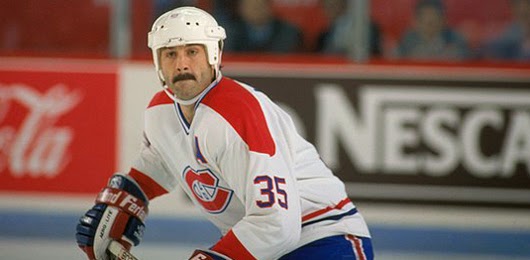
The Hockey Unknows : Mike McPhee


Michael Joseph McPhee (born July 14, 1960 in Sydney, Nova Scotia and raised in River Bourgeois, Nova Scotia) is a retired Canadian ice hockey forward.


He began his professional career with the AHL’s Nova Scotia Voyageurs after being selected in the sixth-round (124th overall) of the 1980 NHL Entry Draft by the Montreal Canadiens.[1]


He began his NHL career with Montreal in 1984. McPhee was a member of Montreal's Stanley Cup winning team in 1986. His best NHL season came in 1987-88, with linemates Guy Carbonneau and Russ Courtnall, when he scored 23 goals and 43 points. The following season, he took part in the only NHL All-Star Game of his career.

He was also a three-time winner of the Jacques Beauchamp Trophy as the Montreal Canadiens’ unsung hero.[2]


McPhee also played with the Minnesota North Stars and Dallas Stars before a knee injury forced him to retire following the 1993-94 season.


McPhee earned a civil engineering degree at Rensselaer Polytechnic Institute, where he was a standout player for the Engineers before making his professional debut in 1982. After retiring from the NHL, he went back to school to complete his MBA.[3] He is currently working as a financial advisor for National Bank of Canada in Halifax, Nova Scotia.


 STATS :


mercredi 7 octobre 2015

Montreal Canadiens - Paul Byron


Source : hockeysfuture.com

History
2006-07: Paul Byron’s first season in the QMJHL was spent with the Gatineau Olympiques, a 68 game campaign that resulted in 21 goals and 44 points total.
2007-08: In 52 games with Gatineau, Byron potted 37 goals and 68 points in 52 games. He excels in the postseason as he proved by netting 21 goals and 32 points in 19 playoff games on his way to the QMJHL title.
2008-09: The Gatineau Olympiques (QMJHL) center netted 33 goals and 99 points in 64 games, his highest totals to date. He was nominated to the QMJHL All-Star second team this season. Expect to see him make the AHL jump and appear with Portland for 2009-10.
2009-10: After signing a contract with Buffalo, Byron entered his rookie season with Portland. A fair amount of success followed the undersized center with 14 goals and 33 points.
2010-11: Byron had an excellent sophomore year for the AHL Portland Pirates while being called up on two occasions late in the season to the Buffalo Sabres where he scored his first NHL goal with an assist in eight games. The 22-year-old centerman also scored 26 goals (ten on the power play) along with 27 assists and an even rating in 67 AHL games in Portland. He contributed two goals along with five assists and an even rating in the 12 AHL playoff games.
2011-12: Obtained by Calgary in a June 2011 trade with Buffalo, Byron appeared in 22 games for the Flames and skated for Calgary's AHL affiliate in his third pro season. After opening the season with Abbotsford, he made his debut with the Flames in early November and had four call-ups during the year. He scored 3 goals with 2 assists and was plus-three with 2 penalty minutes with the Flames. Byron scored 7 goals with 14 assists and was an even plus/minus with 40 penalty minutes in 39 games for Abbotsford. The Heat finished second in the West Division and reached the second round of the playoffs. Byron scored 1 goal with 3 assists and was plus-one with 2 penalty minutes in eight playoff games.
Talent Analysis
Byron plays a solid two-way game with playmaking offensive skills and quick acceleration to get to the open ice. The small, speedy centerman does not play scared but his size could make it difficult with his defensive zone coverage at the NHL level.

Future
Byron will start the season with the Abbottsford Heat at the AHL level but will need play on one of the top two forward lines and show improved offensive numbers. If the speedy forward can get good results early in the season, he may have the chance to play in Calgary again this year should the NHL lockout get settled in time for the 2012-13 season.

mardi 12 mai 2015

Nouvelles en vrac - LNH

lundi 11 mai 2015

LNH : Nouvelles en vrac

samedi 9 mai 2015

LNH : Nouvelles en vrac

vendredi 8 mai 2015

Les premières ligne du hockey !

mercredi 29 avril 2015

Hockey card magic - Lanny McDonald Stanley Cup moments 1989

Le métier de défenseur n’est pas toujours facile !


 Note : Voici un vieux texte de ma part (2009) qui est encore d'actualité je tenais a vous le partager merci.

Après avoir aidé les Stars de Dallas à gagner la Coupe Stanley en 1999, le vétéran défenseur Craig Ludwig a commencé à ce moment-là à recevoir des appels de Toronto pour le Temple de la renommée.  Les représentants de Toronto ne voulaient pas introduire un des meilleurs bloqueurs de tirs au Temple ; la seule chose qu’ils désiraient était ses protecteurs de tibia.

Pourquoi voulaient-ils ces fameux protecteurs ?  Le fait est que Ludwig a joué tout son hockey mineur et ses 20 ans de carrière dans la LNH, en jouant avec les mêmes protecteurs.  Étant considéré comme le meilleur bloqueur de tirs de tous les temps, il méritait sa place sur le mur du Temple de la renommée.

Il va sans dire que bloquer un tir est en soit un exploit extraordinaire.  Se jeter devant un tir qui peut atteindre en moyenne 140 km/h peut s’avérer un jeu très important au cours d’une partie.

Avec les séries qui débutent aujourd’hui, l’importance de bloquer un disque de six onces en caoutchouc dur prend un impact supplémentaire.   Beaucoup plus de joueurs vont être enclins à payer le prix pour bloquer des tirs.  Bloquer un tir n’est pas pour les personnes timides. La douleur est la plupart du temps la récompense après avoir fait l’acte.

Le défenseur d’Anaheim, Chris Pronger, a déjà reçu un tir sur la poitrine, provoquant un arrêt momentané de son cœur.  L’attaquant de Montréal, Trent McCleary, a mis fin à sa carrière lorsqu’il a voulu stopper un tir, mais que ce dernier s’est dirigé directement vers sa gorge.  Cela lui a valu une fracture du larynx et une chirurgie majeure afin qu’il retrouver la parole.

Dimitri Yushkevich, pour sa part, a reçu un tir frappé directement dans le front en 1998, fracturant sa cavité de sinus.   Micheal Peca, de son côté, a reçu un tir sur le pied droit, lui fracturant toutes les orteils et l’a amené à l’infirmerie pour quasiment deux saisons d’affilées.  
Quant à Patrick Thoresen, il a essayé de bloquer un tir pendant les séries de l’an passé et il l’a reçu directement dans l’aine et a quasiment failli perdre un testicule.

Un tir bloqué, comme un combat, peut susciter un revirement de momentum chez les coéquipiers du joueur qui réussit le jeu. La façon idéale pour bloquer un tir consiste à laisser les pieds entre le tireur et le but, laissant les équipements de protection prendre le coup. 

Richard Matvichuk, qui a joué avec les Stars et gagné la Coupe Stanley avec Lugwig, a perfectionné la méthode à un genou, ce qui permet au joueur de pouvoir se relever plus rapidement après avoir bloqué le tir.

Mais, dans le feu de l’action, souvent la détermination dépasse le bons sens et cela résulte à ce que  les joueurs se mettent en position horizontale sur la glace, le tout rendant le joueur en position beaucoup plus vulnérable aux blessures.

Le blocage de tirs a joué un rôle important dans la conquête de la Coupe Stanley des Stars en 1999.  L’ancien directeur général, Bob Gainey, était lui-même un spécialiste en cette matière et a forgé son équipe à ce moment-là de joueurs très qualifiés dans le domaine, avec les défenseurs Derian Hatcher, Darryl Sydor, Craig Ludwig et Richard Matvichuk , et les avants Guy Carbonneau, Mike Keane et Dave Reid.

Sydor, pour sa part, est devenu beaucoup plus qu’un simple spécialiste dans les tirs bloqués au cours de sa carrière : après que les Stars ait fait son acquisition en novembre, via une transaction, il a été le meilleur défenseur au chapitre des tirs bloqués cette saison.

Pour conclure, on peut dire qu’au lieu de défier l’attaquant, les défenseurs sont maintenant plus tentés de se jeter devant un tir ou une passe pour essayer de bloquer, ce qui représente une importance capitale dans un match pour un spécialiste en la matière.

mardi 21 avril 2015

Le Canadien mérite son avance


source : journalmetro.com


Si on ne regarde que le sommaire des matchs, il est facile de conclure que les Sénateurs ne méritent pas d’être balayés par le Canadien.

Après tout, leurs trois défaites, dont deux en prolongation, n’ont été que par un but.

Mais si on tient compte des chances de marquer, il est plus que clair que la troupe de Michel Therrien a eu un net avantage lors des trois premiers matchs.

Oui, les marges de victoire sont étroites, mais il faut aussi considérer la manière dont le Canadien l’a emporté.

Les statistiques

Le Canadien a obtenu 56,6% des chances de marquer jusqu’à maintenant dans la série, une statistique impressionnante, surtout que le Tricolore a fini la saison régulière avec un taux de seulement 47,8%, le 24e dans le circuit Bettman.

Le Canadien a aussi un avantage en matière de possession de rondelle contre les Sénateurs (52,9%).
Parmi les attaquants, Brendan Gallagher domine au chapitre des occasions de marquer, suivi par Max Pacioretty et Alex Galchenyuk.

Contribution partagée

Autre aspect positif du jeu du Tricolore depuis le début des séries, les buts ne proviennent pas seulement du premier trio. Brian Flynn et Torrey Mitchell ont fait fureur durant le premier match tandis que Dale Weise a été le héros du troisième.

Comme le souligne P.K. Subban, toute bonne équipe a besoin de l’apport de tous ses joueurs.

«Lorsqu’on analyse les champions de la Coupe Stanley des dernières années, on voit qu’ils ont tous reçu l’aide d’employés de soutien», a-t-il dit.

Concentré sur l’objectif

En dépit du pointage des trois dernières rencontres, Michel Therrien est très confiant, voire serein.


«On a souvent eu des matchs serrés qu’on a gagnés durant la saison. Je ne sens pas de panique, spécialement avec Carey Price.» Pas facile de contredire l’entraîneur-chef puisque Price n’a jamais perdu quatre matchs de suite cette saison.

À l’heure actuelle, il règne une confiance paisible chez le Canadien. Cela ne veut toutefois pas dire que l’équipe négligera ses adversaires. Quand les médias ont demandé à Price si le CH avait imaginé avant la série pouvoir être en position de balayer les Sénateurs, il a simplement dit: «Cela n’a aucune importance.»

Il est encore trop tôt pour enterrer les Sénateurs, mais il est temps de dépoussiérer la pelle.

La robustesse, pas si payante

Depuis le début de la série, les Sénateurs se concentrent sur la robustesse (en visant principalement P.K. Subban).

La technique a rarement fonctionné contre le Bleu-blanc-rouge, et cette série ne fait pas exception. Généralement, quand une formation domine au chapitre des mises en échec, c’est parce qu’elle n’a pas le contrôle de la rondelle. Pour enfoncer le clou, rappelons que des cinq équipes qui ont mené la Ligue nationale à ce chapitre cette saison, seulement l’une d’entre elles s’est qualifiée pour les éliminatoires.

Terrific night, tough loss as NHL playoff hockey returns to Winnipeg after 19 years

Winnipeg fans welcomed back NHL playoff hockey – and the 'Whiteout' – with great enthusiasm. (Getty)
 Winnipeg fans welcomed back NHL playoff hockey – and the 'Whiteout' – with great enthusiasm. (Getty)

source : yahoo.com

Silence. The puck came out to the point, Francois Beauchemin fired it and Rickard Rakell deflected it into the net 5:12 into overtime Monday night. Just like that, the MTS Centre went from one of the loudest arenas of all-time to one of the quietest.

As the Anaheim Ducks celebrated their 5-4 victory and 3-0 first-round series lead over the Winnipeg Jets, you could hear their whoops and hollers all the way up to the rafters. Fans started filing out. 

After maybe a minute, some chanted, “Go, Jets, go!” But soon they faded, and there was no sound again. Hundreds stayed in their seats, stunned.

Nineteen years they had waited for this. Nineteen years they had waited to see an NHL playoff game in Winnipeg. Now they had to process a bittersweet mix of emotions – pride, excitement, frustration, disappointment.

 “That’s one you’ll always remember,” said Jets winger Blake Wheeler. “Just too bad it wasn’t a more fond memory.”

There had been Winnipeg weather – cold, wind, snow – and talk of omens. There had been a return of Winnipeg’s traditional “whiteout,” fans in white jerseys and white shirts and white hats, fans with white wigs and white hardhats and white helmets with red lights flashing on top. There were white suits and at least a couple of white tuxedos. There was at least one wedding dress.

There were roars like you’ve never heard before. They didn’t just cheer Winnipeg goals. They cheered Anaheim icings.

“That’s as good a building as I’ve ever seen in my life,” said Jets coach Paul Maurice, who has been behind the bench for more than 1,250 NHL games in the regular season and playoffs.

Yet the Jets blew a third-period lead for the third time in three games. Yet they gave up the tying goal to Ryan Kesler with 2:14 left in regulation – the same Ryan Kesler the fans had been jeering all night.
Yet they couldn’t cash in on a power play right after that. Bryan Little hit a post, then got robbed by goaltender Frederik Andersen.

This franchise still hasn’t won a playoff game since the Atlanta Thrashers entered the NHL in 1999-2000. This city still hasn’t witnessed an NHL playoff victory since April 21, 1996.

“It was a special, special night for us in terms of the energy from the fans and the city,” said Jets winger Lee Stempniak. “We certainly feed off that emotion. We have great fans. They’re a huge part of our home-ice advantage. It’s hard to put into words how tough this loss is.”

* * * * *
The last time this city hosted an NHL playoff game was April 28, 1996. The original Jets were facing the Detroit Red Wings at Winnipeg Arena, the old barn with the portrait of the queen, and everyone knew a loss would mean more than elimination. A loss would mean relocation.

The Jets lost, and so the fans said goodbye. They stood and cheered as players shook hands, and then they stood and cheered some more as the Jets acknowledged them one last time. A homemade banner unfurled from the upper deck: “OUR JETS WILL FLY 4 EVER.”


.
The NHL left Winnipeg for Phoenix in 1996 and returned via Atlanta in 2011.

Fans wept. Even players wept. The problem wasn’t a lack of passion for the team or the game. The problem was economics and politics.

“The team when it left was a victim of circumstances,” said NHL commissioner Gary Bettman. “The government agreement was over. There was no prospect of a new building. There was nobody that wanted to own the team here.”

The Jets moved to Phoenix – and took the traditional playoff whiteouts with them – and Winnipeg became a minor-league town. But in the mid-2000s, two things happened: the MTS Centre was built for the AHL’s Manitoba Moose with 15,000 seats, just enough for an NHL team if the opportunity ever arose, and the NHL introduced the salary cap, changing the dynamic for small markets.

Mark Chipman and his partners at True North Sports and Entertainment waited patiently and quietly, and they got their chance when the Atlanta Thrashers ran into trouble and the NHL ran out of options in 2011.

Winnipeg would be the smallest market in the league. It would have the smallest arena in the league.

But its time had come (again). People partied at Portage and Main. They bought 13,000 season tickets in 17 minutes – and it took that long only because the computers needed 15 minutes to process the credit cards.

As soon as winger Andrew Ladd arrived for a visit, he knew he wasn’t in Atlanta anymore. The team had just been sold. It didn’t have a new nickname or a logo yet. But as he stood at baggage claim, a fan recognized him and said: “Welcome to Winnipeg.”

Chipman announced at the draft the team would be called the Jets, and the city celebrated again. Then came the new logo. Then came the new uniforms.

Before the first season started, the fans already had gotten to know the players and adopted them. One player visited an elementary school. A little girl handed him a can of Barq’s Root Beer she had brought from home. She had heard him mention in a radio interview it was his favorite.

The first regular-season game was Oct. 9, 2011. The fans cheered as the clock counted down. When the play stopped with 1.6 seconds left, that gave them one more chance to chant: “Go, Jets, go!” The standing ovation continued through the final horn and didn’t end until after the last man had left the ice.

And the Jets had lost to the Montreal Canadiens, 5-1.

* * * * *

Soon Winnipeg wasn’t happy just to be back in the NHL.

“Our first year, they wanted a winning team,” said defenseman Jim Slater, who has spent his entire 10-year NHL career with the franchise. “Everything you read and hear on the radio, there’s obviously those fans who want it to happen right now.”

General manager Kevin Cheveldayoff remained patient – too patient for some. But he replaced coach 
Claude Noel with Maurice last season, and the Jets made a run. He made a number of moves this season, and the Jets made the playoffs.

After the Jets clinched April 9, they returned from Denver after a 1-0 shootout victory over the Colorado Avalanche to find about 200 fans waiting for them at the airport. It was 2:30 a.m. It was a Thursday night – or a Friday morning, rather. But there they were, wearing jerseys, holding signs, cheering as the players walked to their cars.


.
The Jets are still looking for the franchise's first NHL playoff victory. (AP)

“Where we’re parked, I don’t even know how they know where we are, let alone what time we’re going to be home,” Little said. “I don’t think you’d see that in a lot of other places.”

Most season-ticket holders exercised their option to buy playoff tickets. Less than 1,000 were made available to the public for Games 3 and 4 of this series, and they sold out in six minutes – and it took that long only because the computers needed five minutes to process the credit cards. If you were looking on StubHub on Monday afternoon, only eight tickets were for sale. Eight. The cheapest was $649.

“Not a lot of people know where Winnipeg is on a map, but they definitely know where their hockey team is, and we take a lot of pride in that,” Slater said. “It’s a small community, but a big community with hockey.”

Maurice, who has also coached the Hartford Whalers, Carolina Hurricanes and Toronto Maple Leafs, said the connection between the city and the team in Winnipeg was unlike any he had seen before.

They appreciate having an NHL team again. They appreciate this NHL team for how hard it plays. He feels a responsibility to bring out the best in their loved ones.

“You get the feeling like you’re kind of like the teacher here and you’ve got their kids, and their kids are the Winnipeg Jets hockey team,” Maurice said. “And through the course of the regular season they’ve been getting pretty average to below-average marks, and they’re finally getting some good grades. They kind of come over and thank you, like, ‘Hey, my kids are doing great.’ ”

Fans lined up Monday night, waiting for the gates to open. Dean Cockrell, 63, was first at the ropes.
“The last game, it was sad,” said Cockrell, who was there 19 years ago. “The team was leaving. I don’t know that anybody really knew how to react back then. I think for a lot of people this is surreal. I’m in the older generation, so I remember. I think for a lot of people, they were so young, they really don’t remember the old Jets, so this is going to be exciting for them, too. You have another whole generation now.”

* * * * *

Look at it this way, Winnipeg. To lose, you have to be in the game. This is part of being in the NHL, part of making the playoffs. And the series isn’t over yet. Just last year, the Los Angeles Kings lost Game 3 in OT at home and fell into a 3-0 first-round series deficit. They rallied to win the series and the Stanley Cup.

David Thomson, a co-owner of the Jets, rode down an elevator without a word Monday night. Asked for his feelings, he said: “It was an extraordinary game and a wonderful atmosphere.”

He paused.

“And there’s Game 4.”

He paused again.

“And there’s Game 4.